Our Agribusiness Model

The Full Chain Integration For Maximum Return

Model Overview

Every agricultural business in Africa is losing money at a stage it does not control.

The farmer who cannot process sells raw at the lowest point in the value curve. The processor without reliable supply cannot fulfil contracts. The distributor without upstream control cannot guarantee the quality export buyers require.

Each gap is a profit leak. FEED AFRICA GLOBAL PROJECT plugs every leak — by owning every stage.

Full Value Chain

Core Operations

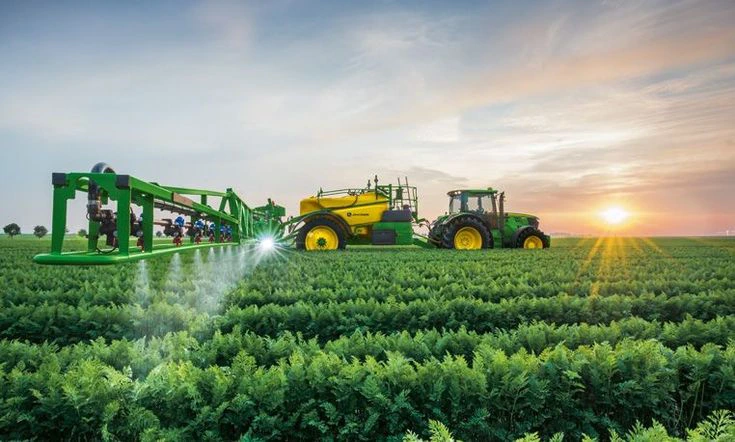
We operate 2,000 hectares of deed-secured, tilled, and irrigated agricultural land in Nigeria, planted with palm, cocoa, and other crops with high economic values — three crops selected for domestic demand, export value, and long-cycle yield.

Industrial-scale production — mechanised, professionally managed, structured for consistent output across a 3 to 5 year horizon. Scale is what makes processing economically viable, what gives distribution partners a reason to show up, and what institutional buyers — government procurement, supermarket chains, export distributors — actually need from a supplier.

This is where Africa loses the most money — and where we capture the most.

Africa produces approximately 70% of the world’s cocoa. Most of it leaves the continent as a raw bean worth a fraction of what it becomes after processing. The same pattern applies to palm.

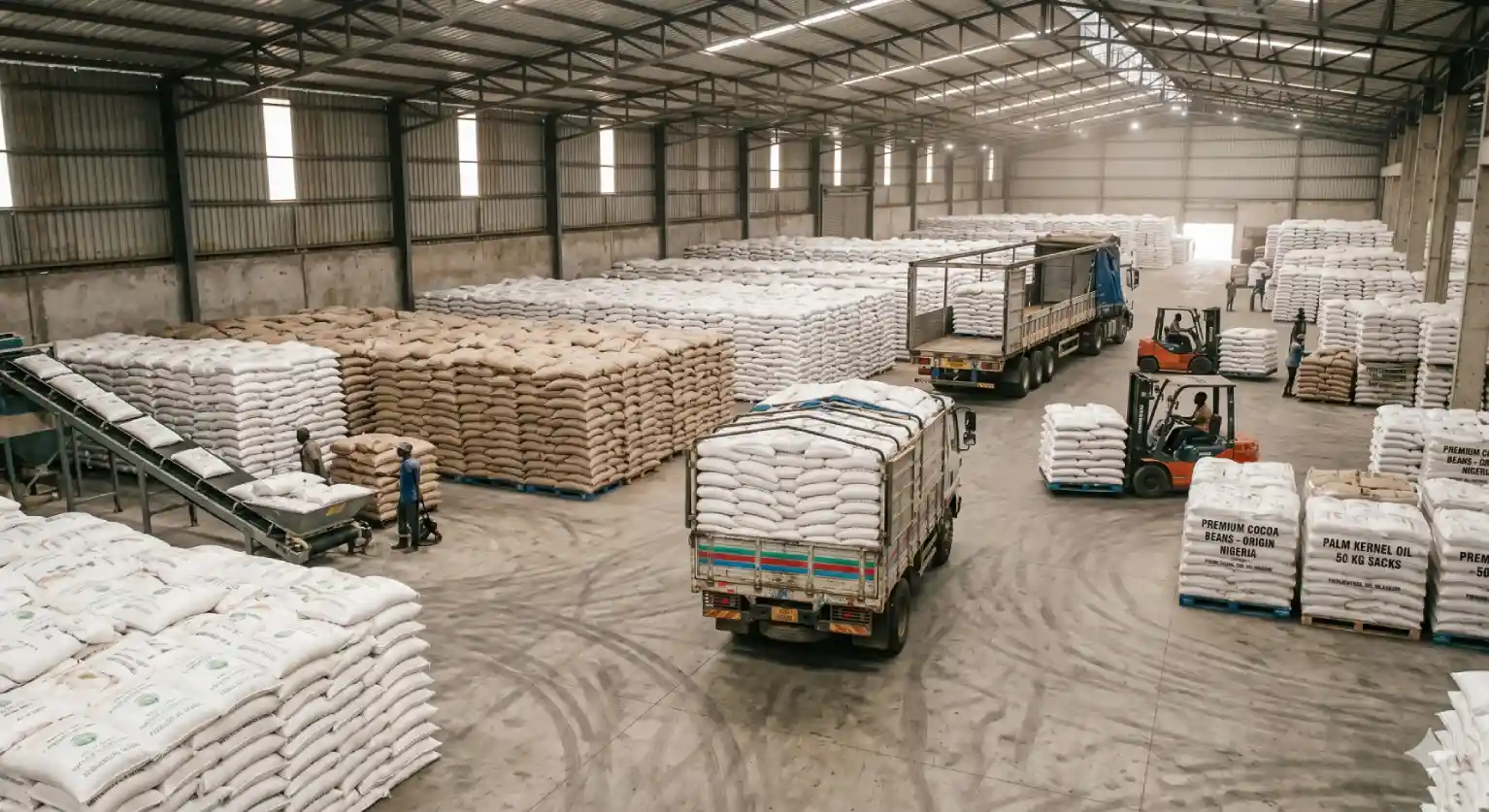
Our processing operations transform raw output into shelf-ready, export-ready products. Palm refined. Cocoa is processed into butter, liquor, and powder. We deliver market-ready products that require zero additional handling — making us a turnkey supplier, not a raw material vendor.

Packaging is market access, not cosmetic.

A product packaged to Nigerian retail standards enters Nigerian supermarkets. A product packaged to international export specifications enters global supply chains. Our packaging operations ensure every product leaving our chain is market-ready for its intended buyer — without additional handling costs on their end.

The most productive farm in Africa is commercially worthless without a system to move what it grows.

Our distribution infrastructure serves two channels simultaneously:

  • African Domestic: Nigerian retail, wholesale, and institutional food procurement.
  • International Export: Global commodity buyers seeking consistent, quality-controlled African agricultural product.

Both are active revenue streams. Neither is a backup plan for the other.

Land Strategy

The Deed- Secured Undermath Everything.

Our Nigeria launch operates on 2,000 hectares of deed-secured agricultural land — one of Nigeria’s most agriculturally productive zones. Every plot is backed by a Deed of Assignment, fully tilled and cultivated, planted with high export-value crops, irrigated, secured, and professionally maintained. Owned, documented, and inspectable — designed for decades of productive use.

Revenue Streams

Capturing Value at Every Stage

First Stream
Second Stream
Third Stream
Fourth Stream

Dual Market Strategy

Domestic Stability. Export Growth.

The domestic market provides production consistency. Nigerian food demand is not seasonal, does not fluctuate with global commodity cycles, and grows with the population. Serving it is the most direct path to food security in Nigeria.

The export market provides margin expansion. Processed agricultural products sold internationally command premiums that domestic pricing cannot match — and generate foreign currency revenue, a structural advantage in the Nigerian economic environment.

Scalability And Expansion Logic

Nigeria Proves It. Africa Scales it

The Nigeria launch is not the destination. It is the template.

Once the operation demonstrates full value chain performance — crop yield, processing output, distribution coverage, investor return trajectory — the operating playbook is documented and transferable.

West Africa is next: Ghana, Côte d'Ivoire, Senegal — compatible agricultural profiles, growing urban food demand, receptive policy environments. Sub-Saharan Africa follows — crop mix and distribution architecture adapted to each regional context, built on the same integrated platform logic.

We are not building one farm. We are building the blueprint for a continental food system.

Connect to Feed Africa Global

Let us build Africa’s integrated food system from land to market and at continental scale.