Advancing Food Security Across Africa Through Agribusiness
Discipline is a competitive advantage
Most platforms that fail in African agriculture fail for the same reason: they try to grow everything, everywhere, immediately.
Priority Crops
Selected for Commercial Logic, Not Trend-Chasing
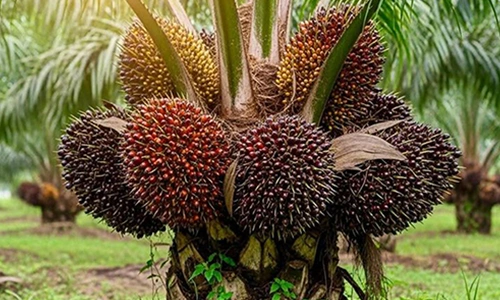
Sustainable Palm
Nigeria is one of the world's top palm oil producers. Nigerian consumers pay some of the world's highest prices for processed palm oil — because most of the processing happens outside the country.
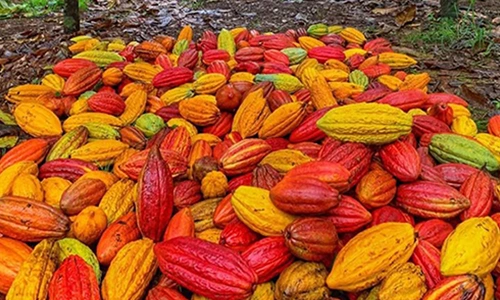
Export-Grade Cocoa
Africa produces approximately 70% of the world's cocoa. Africa processes less than 30% of it.
The price difference between a raw cocoa bean and cocoa butter, cocoa powder, or cocoa liquor is not marginal. It is transformational. For every tonne of cocoa that leaves Africa unprocessed, the continent surrenders the most valuable part of what it grew.
Other Economic Crops
Africa grows the majority of the world's sesame seeds, supplies a significant share of global ginger and garlic demand, and produces turmeric across climates that rival the best yields in Asia, yet nearly all of it leaves the continent raw. We are closing the gap between what they are worth at harvest and what they are worth refined.
The financial, logistics, and regulatory infrastructure is more developed than in comparable markets.
Largest domestic food market in Africa
Over 220 million consumers, rapidly urbanising, with food import dependency already creating political and economic pressure for domestic alternatives. Food security in Nigeria is not a distant policy goal — it is an urgent market need.
Agricultural land base
Nigeria's high-yield, well-watered agricultural zones are established for the crops we are planting.
Policy alignment
Nigerian federal and state governments are actively seeking credible commercial agribusiness partners to advance food security in Nigeria through private-sector-led production.
Proof-of-concept gravity
What works in Nigeria — the continent's most complex and competitive market — works everywhere. If the agribusiness model performs here, the regional expansion case writes itself.
Regional Expansion Path
Three phases. One Operating Logic.
Nigeria
We start where the model is already working. Starting with Nigeria, the full operation is running, returns are being tracked, and results are documented. This is proof of concept, not a promise.
West Africa
Then we expand to other West African countries like Ghana, Côte d'Ivoire, and Senegal. Three markets with the right soil, the right crops, and governments actively choosing local food production over imports. The demand is growing. The conditions are ready.
Sub-Saharan Africa
Continuing to East Africa. Then Southern Africa. Then the continent. One proven playbook, applied across multiple agricultural zones — building a food system that doesn't depend on anyone outside Africa to feed Africa.
Agricultural Industrialisation
Why Fragmented Farming Cannot Supply an Industrial Food System
Supermarket chains need consistent volume. Export buyers need reliable quality. Government institutional procurement needs documented supply contracts.
Smallholder agriculture feeds millions across Africa and has its place — but the institutional buyers driving food system demand require something different: mechanised, large-scale, professionally managed operations with agribusiness technology, processing infrastructure, and distribution systems to deliver what they need, when they need it, at the specification they require.