Africa’s arable land investment is quietly becoming a topic of conversation in boardrooms, family offices, and impact funds worldwide.
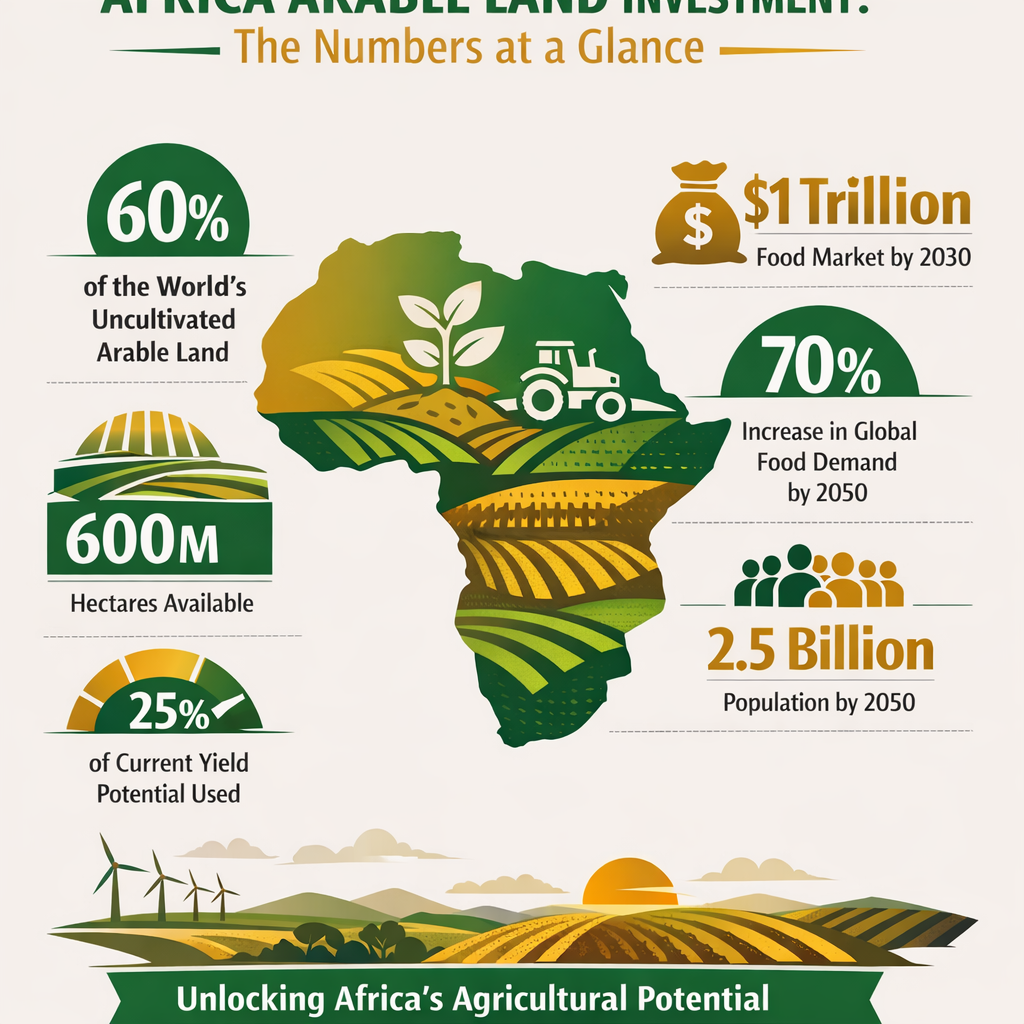
The reason is that Africa holds approximately 60% of the world’s uncultivated arable land, according to the Food and Agriculture Organization (FAO).
Imagine owning a piece of the most fertile, productive land on earth.
Land that has barely been touched. Land sits atop the next great wealth-creation opportunity.
That land exists, and it is in Africa. Yet, most of it remains underdeveloped. Meanwhile, global food demand is rising fast.
The United Nations projects the world population will reach 9.7 billion by 2050. Feeding that population will require a 70% increase in global food production.
Where will that food come from?
The answer, increasingly, points to Africa.
Why Africa’s Farmland Has Been Overlooked for So Long
For decades, Africa’s agricultural land was dismissed. Investors cited infrastructure gaps, political instability, and limited market access as reasons to stay away.
However, those narratives are changing rapidly.
Today, African governments are investing in rural roads, irrigation systems, and cold chain logistics.
Technology companies are deploying precision farming tools across the continent.
Development finance institutions are pouring billions into agricultural infrastructure.
Additionally, the African Continental Free Trade Area (AfCFTA) has opened a $3.4 trillion market for intra-African trade. This fundamentally changes the commercial viability of investments in Africa’s arable land.
Furthermore, global investors who entered early in emerging-market real estate, Asian manufacturing, and Latin American commodities earned extraordinary returns.
Africa’s farmland is at that same inflection point right now.
The question is not whether Africa’s land will be developed. The question is who will own the upside when it is.
This is what the smart money already knows:
- Africa has 600 million hectares of uncultivated arable land
- Sub-Saharan Africa alone accounts for a significant portion of the world’s freshwater resources
- African soil in regions like the Congo Basin, the Sahel, and East Africa is among the most naturally fertile on earth
- Land acquisition costs in Africa remain significantly lower than in North America, Europe, or Asia
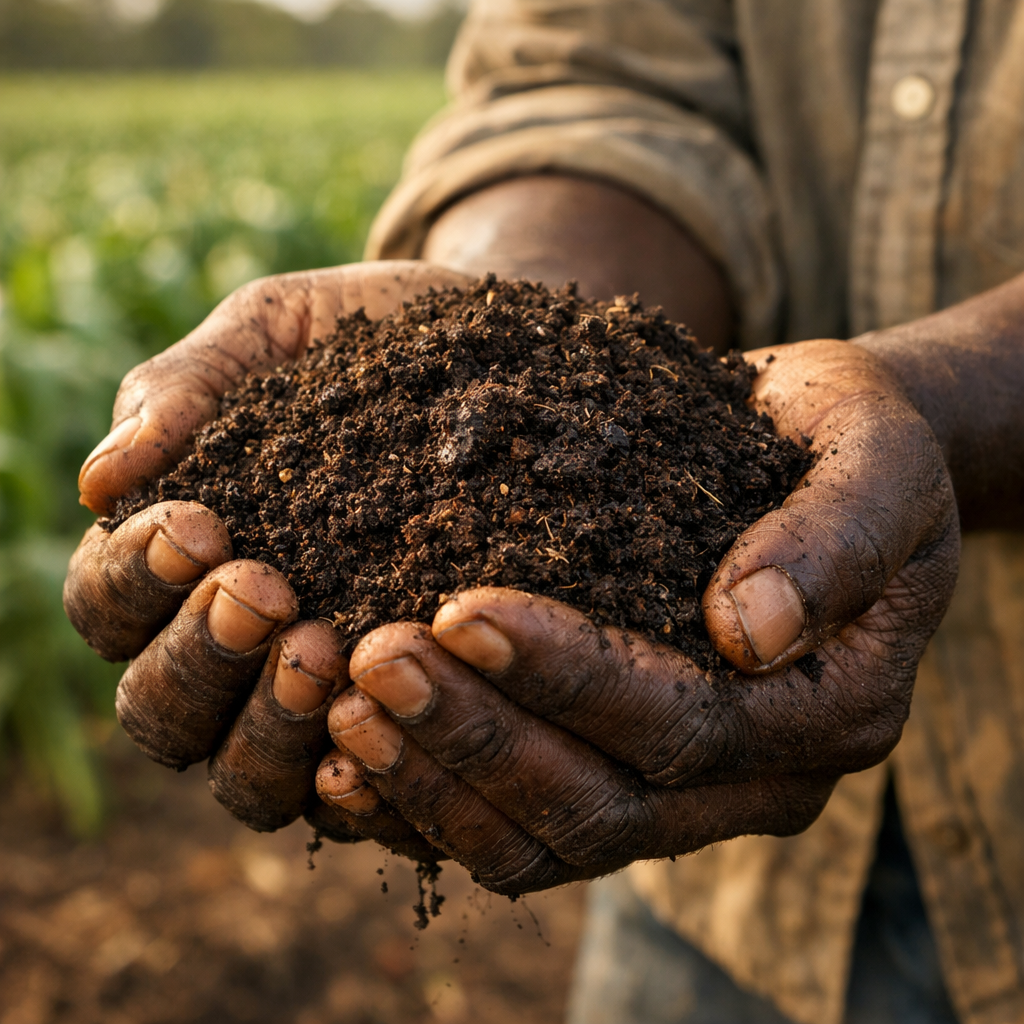
The Numbers Behind Africa’s Arable Land Investment
The numbers behind Africa’s investment in arable land are compelling.
Consider this: according to the World Bank, agricultural productivity in Sub-Saharan Africa is currently at only 25% of its potential.
That means three-quarters of the value sitting in African soil has not yet been unlocked.
Moreover, the African Development Bank (AfDB) estimates that African agriculture could generate a $1 trillion food and agribusiness market by 2030 if the right investments are made today.
That is not a small opportunity. That is a generational one.
Below are the key investment metrics every serious investor should know:
- Land Value Appreciation: Farmland in key African markets like Ethiopia, Mozambique, and Tanzania has appreciated consistently over the past decade.
- Yield Potential: With modern inputs and irrigation, African farms can achieve yields 3 to 5 times higher than current output.
- Labor Advantage: Africa has the world’s youngest and fastest-growing workforce, with over 60% of the population under 25.
- Export Opportunity: Global demand for ethically sourced, organic, and traceable food is rising. African farmland is perfectly positioned to supply it.
- Carbon Credit Income: Sustainable farming practices on African land can generate verified carbon credits, creating an additional revenue stream for investors.
Consequently, the risk-return profile of Africa’s arable land investment is increasingly attractive compared with traditional asset classes such as equities, bonds, and even commercial real estate.
What Makes African Farmland Different From Other Agricultural Markets
You might be wondering: why Africa specifically? Why not Brazil, Ukraine, or Southeast Asia?
The answer lies in three unique advantages that no other region can match.
1. Scale: Africa’s uncultivated arable land is not measured in thousands of hectares. It is measured in hundreds of millions of hectares. No other continent offers this scale of undeveloped agricultural opportunity.
2. Biodiversity: Africa’s climate zones range from tropical rainforests to Mediterranean coastlines to savannah grasslands. This diversity means the continent can produce virtually any crop for any global market year-round.
3. Demographic Dividend: Africa is the only continent where the working-age population is growing rapidly. By 2050, Africa will be home to 25% of the world’s population. This creates both a massive domestic food market and an abundant labor supply for commercial agriculture.
In addition to these structural advantages, several African governments are now offering tax incentives, land-lease frameworks, and public-private partnership structures.
These are specifically designed to attract foreign agricultural investment.
Countries such as Rwanda, Ghana, Senegal, and Côte d’Ivoire have significantly streamlined their agricultural investment frameworks.
Similarly, Ethiopia and Mozambique have established dedicated agricultural investment zones with guaranteed land tenure and export facilitation.
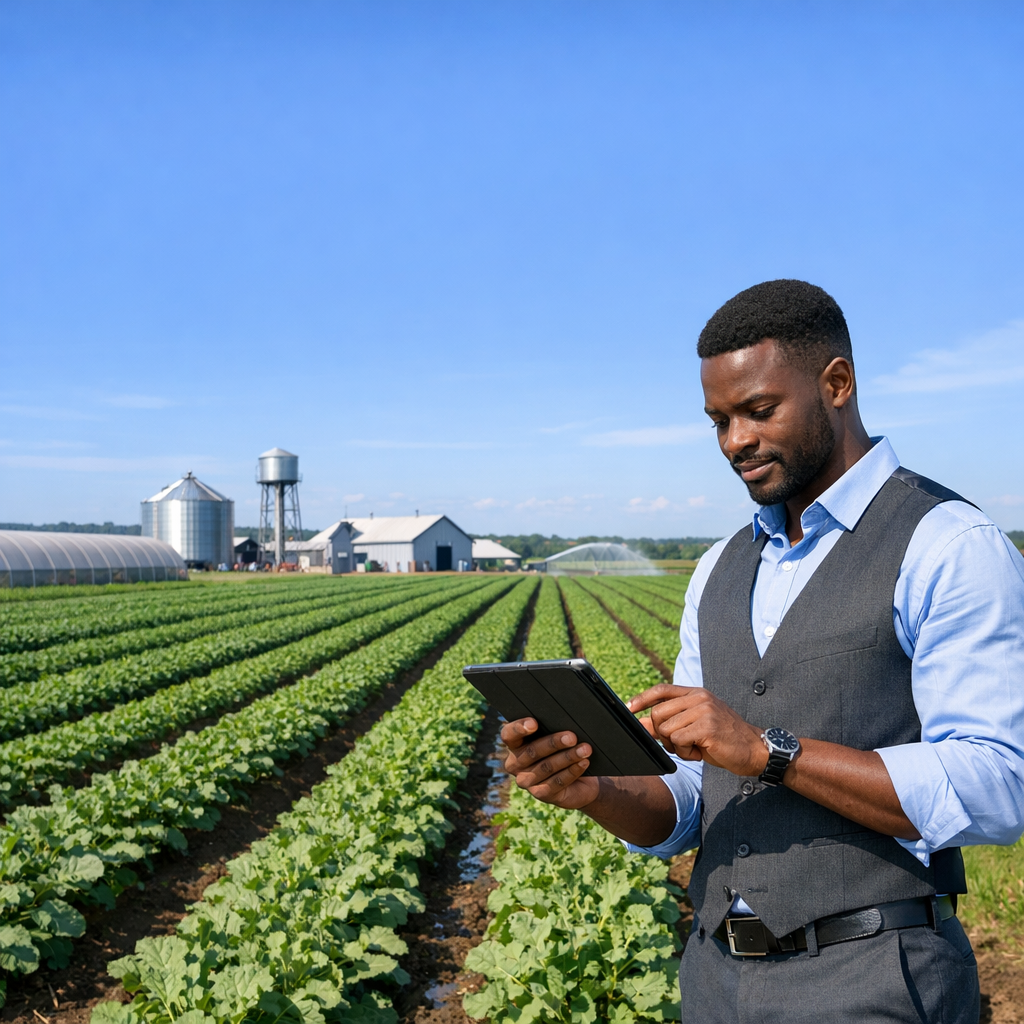
How the Feed Africa Global Project is Unlocking This Opportunity
This is where Africa’s investment in arable land moves from theory to practice.
Feed Africa Global Project is a large-scale commercial agribusiness initiative. It is designed specifically to bridge the gap between untapped African farmland and global market demand.
The model is straightforward but powerful:
- Identify and activate high-potential arable land across key African regions
- Deploy precision farming technology to maximize yield per hectare
- Build agro-industrial infrastructure, including storage, processing, and cold chain logistics
- Connect producers to global buyers through established off-take agreements
- Generate returns for investors while creating sustainable income for local farming communities
This is not subsistence farming. This is institutional-grade agricultural commercialization at scale.
Furthermore, the Feed Africa Global model addresses the three biggest risks that have historically kept investors away from Africa’s arable land investment:
- Market Access Risk – eliminated through guaranteed off-take agreements
- Infrastructure Risk – mitigated through integrated logistics development
- Yield Risk – reduced through precision farming and agronomic expertise
The result is a risk-adjusted return profile that competes favorably with any global agricultural investment market.
The ESG Case for Africa Arable Land Investment
Beyond financial returns, investment in Africa’s arable land carries a powerful ESG (Environmental, Social, and Governance) narrative.
For ESG-focused investors and impact funds, African farmland investment checks every box:
- Environmental: Climate-smart farming practices, carbon sequestration, and regenerative agriculture improve soil health and reduce carbon emissions
- Social: Commercial agriculture creates millions of jobs, lifts farming communities out of poverty, and improves food security for millions.
- Governance: Transparent land tenure agreements, third-party auditing, and international quality certifications ensure accountability
Moreover, global institutional investors are under increasing pressure from regulators, shareholders, and the public to demonstrate measurable ESG impact.
African agricultural investment offers one of the clearest, most verifiable impact stories available in any asset class today.
According to the Global Impact Investing Network (GIIN), impact investments in African agriculture consistently deliver market-rate or near-market-rate financial returns alongside measurable social and environmental benefits.
It is precisely why forward-thinking family offices and ESG funds are paying close attention to investments in Africa’s arable land right now.
Is Now the Right Time to Invest in African Farmland?
Here is the honest answer: the window is open, but it will not stay open forever.
Global food prices are rising. Climate change is reducing arable land in traditional agricultural regions like Europe and North America.
Meanwhile, Africa’s farmland remains largely untouched and undervalued.
Early movers in Africa’s arable land investment are already seeing the benefits. Land values are appreciating.
Yield improvements from precision farming are generating strong returns. Export markets for African produce are growing steadily.
Nevertheless, many investors are still waiting and hesitating. They are listening to decade-old narratives about African risk.
The investors who acted early on Brazilian soy farms, Australian cattle stations, and Eastern European wheat fields are no longer waiting. They are counting their returns.
The same opportunity exists today in Africa.
The soil is fertile, and the demand is real. The infrastructure is being built. The frameworks are in place.
The only question left is whether you will be in the room when the harvest comes.
Conclusion
Investment in Africa’s arable land is not a future opportunity. It is a present one.
The land is there. The demand is growing. The returns are increasingly well-documented. And the ESG impact is undeniable.
To summarize what you have learned:
- Africa holds 60% of the world’s uncultivated arable land
- Global food demand will require a 70% production increase by 2050
- African farmland offers scale, biodiversity, and demographic advantages no other region can match
- The AfCFTA has opened a $3.4 trillion intra-African market
- ESG investors are finding that African agriculture delivers impact and returns simultaneously
- Feed Africa Global Project provides the integrated infrastructure to make this investment accessible and de-risked
The smartest investment decision you can make today is to understand this opportunity deeply before the rest of the market catches up.